Carbon road frames in 2025 represent the most advanced evolution the cycling industry has ever seen. With breakthroughs in carbon fiber layups, aerodynamic modeling, resin chemistry, and manufacturing automation, today’s high-end road bikes are lighter, stiffer, faster, and more comfortable than any previous generation. This in-depth guide explores the latest technologies shaping modern carbon frames and explains what cyclists should look for when choosing a high-performance road bike.
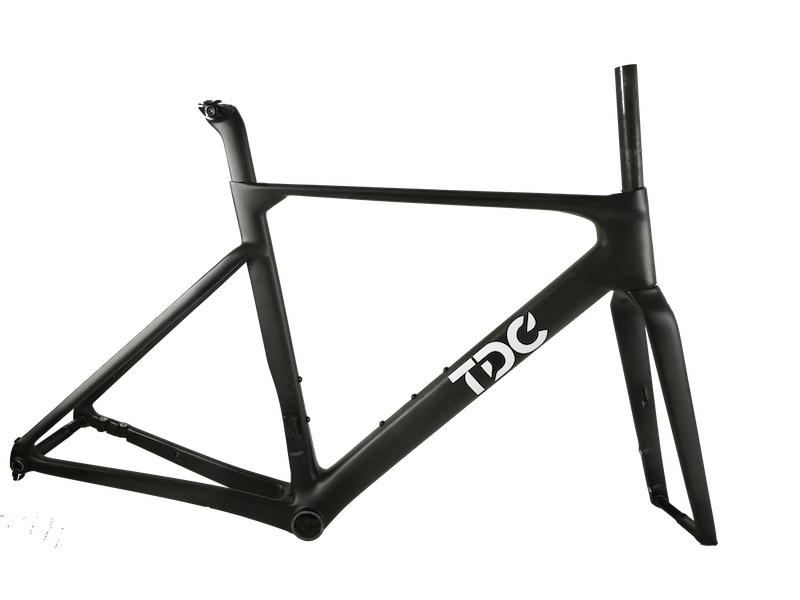
What Makes a Modern Carbon Road Frame Superior?
A modern carbon road bike frame offers a unique combination of low weight, directional stiffness, vibration damping, and aerodynamic efficiency. Unlike aluminum or steel, carbon composites can be shaped, layered, and tuned at the microscopic level. In 2025, manufacturers are taking advantage of:
-
advanced high-modulus fibers
-
nano-enhanced resins
-
CFD-driven aerodynamic optimization
-
robotic layup automation
-
bladderless molding processes
These innovations deliver frames that perform better under real-world riding conditions, including high-speed racing, climbing, and endurance riding.
-
High-Modulus Carbon Fiber Technology: Beyond 60T Materials
Why high-modulus carbon matters
The stiffness-to-weight ratio of a carbon frame depends on the modulus and strength of the fibers used. In 2025, the highest-end road frames use hybrid blends of:
-
60T–65T ultra-high modulus fibers for stiffness in the bottom bracket and head tube
-
high-strength fibers in impact-prone areas like the down tube
-
spread-tow carbon fabrics for improved surface and structural consistency
Nano-resin systems for increased durability
Modern resin systems are reinforced with nano-scale particles, significantly increasing interlaminar shear strength. This reduces the risk of micro-cracks, improves fatigue resistance, and increases the lifespan of the frame—important for riders seeking long-term performance.
2. AI-Enhanced FEA and Simulation: How Frames Are Designed in 2025
Finite Element Analysis (FEA) with real-world inputs
Manufacturers now use AI-enhanced FEA to simulate thousands of layup combinations before building prototypes. Advanced modeling predicts how a frame behaves under combined forces such as:
-
lateral pedaling loads
-
torsional forces in sprints
-
micro-vibrations on rough tarmac
-
high-speed aerodynamic pressure
-
Ride-optimized stiffness tuning
Instead of generic stiffness, frames are tuned for rider posture and pedaling style. This creates more predictable handling and power transfer—ideal for road cyclists, racers, and endurance riders.
3. Aerodynamic Engineering: CFD and Real-World Yaw Optimization
CFD-driven aero shaping
Carbon allows for precise aerodynamic shaping. In 2025, Computational Fluid Dynamics (CFD) is used at every stage, resulting in:
-
cleaner airflow around downtubes and bottles
-
optimized head tube shaping
-
deeper yet lighter aero profiles
-
reduced turbulence behind seat tubes and stays
Designed for real-world wind conditions
Instead of perfect wind-tunnel conditions, modern frames are optimized for 10–20° yaw angles, which riders experience outdoors. This real-world aero tuning provides measurable watt savings in typical riding scenarios.
Integrated cockpit systems
Integrated bar/stem units and internal routing now reduce drag while maintaining serviceability. Improved cable channels and larger access ports solve previous maintenance headaches.
4. Structural Engineering for Stiffness and Compliance
Bottom bracket and chainstay stiffness
Elite climbing and racing bikes now target 100–110 N/mm torsional stiffness at the bottom bracket. Continuous fiber paths from the BB into the chainstays improve power transfer without weight gain.
Head tube torsional rigidity
A stiffer head tube means better cornering and more confidence on descents. Asymmetric layups in fork blades further stabilize steering input at high speed.
Vertical compliance for comfort
Modern carbon road frames incorporate engineered flex zones:
-
leaf-spring seatstays
-
tuned top tubes
-
low-modulus plies in vertical directions
This creates a more comfortable ride, especially with today’s 28–32 mm tires.
5. Manufacturing Innovations: Robotic Layup, Bladderless Molding & Bonded Construction
Robotic carbon layup
Robots now handle up to 60% of the carbon placement, reducing human error and ensuring consistent fiber orientation. This yields stronger, lighter frames with fewer voids.
Bladderless molding using EPS cores
This technique produces sharper aero shapes and smoother internal walls. Benefits include:
-
reduced wrinkles in high-stress areas
-
more precise layup execution
-
improved structural consistency
-
Multi-piece bonded construction
Bonded carbon sections allow for complex tube shapes and more efficient use of high-modulus fibers, particularly in the seat cluster and bottom bracket regions.
6.Integrated Systems: Seatposts, Cockpits, and Smart Features
-
Integrated aero cockpits
-
Modern carbon cockpits use hollow one-piece construction that saves 15–20% in weight while lowering drag.
-
Seatpost wedges and clamping
-
Low-friction polymer interfaces reduce clamping forces and prevent cracking—an issue historically associated with carbon seatposts.
-
Smart integration (emerging trend)
More brands are exploring built-in:
-
tire pressure sensors
-
torque/load monitoring
-
wireless shifting routing channels
-
strain gauges for structured training
These upgrades offer future-proof performance enhancements.
Conclusion: Why Carbon Road Frames in 2025 Are the Best Ever
If you're researching the best carbon road bike frames, the 2025 generation offers everything riders demand:
-
unmatched stiffness-to-weight efficiency
-
cutting-edge aerodynamic optimization
-
enhanced comfort through engineered compliance
-
improved longevity thanks to advanced resin systems
-
precise manufacturing with robotic layup and bladderless molding
For racers, endurance cyclists, and performance-focused riders, today’s carbon frames provide a perfect blend of speed, control, and durability.


 English
 français
 Deutsch
 italiano
 español
 Email Us : sales@tourdecycling.com

 IPv6 network supported